IELTS Speaking Part 1: Shopping Questions & Band 9 Answers (2026)
Latest Sep-Dec 2026 IELTS Speaking Part 1 questions for Shopping. Read Band 9 sample answers or generate personal answers using our AI.
Start Practicing →Shopping is officially on the radar for the Sep-Dec 2026 IELTS exams. The examiner might ask if you enjoy it, where you usually go, or if you prefer online shopping. To score Band 9, avoid saying "I like buying things." Instead, use words like retail therapy, brick-and-mortar, bargain hunter, or impulse buy to describe your habits.
Latest Sep-Dec 2026: Shopping Questions & Sample Answers
1. Do you enjoy shopping?
Yes, but only specific types. I view wandering around a fresh food market as a form of retail therapy. I love the sensory experience of seeing the colorful produce and smelling the spices. However, I find shopping for mundane household essentials quite tedious.
2. How often do you go shopping?
I have a strict weekly ritual. Every Saturday, I visit the farmers' market to stock up on fresh ingredients for the week. For other items, I am not a compulsive shopper; I only buy things when I genuinely need to replace them.
3. Do you prefer online shopping or real stores?
It entirely depends on the product. For food, I prefer brick-and-mortar stores because I need to inspect the quality with my own hands. But for boring necessities like cleaning supplies, I prefer the convenience of technology and having them delivered right to my doorstep.
4. Do you buy clothes online?
I buy basic items like t-shirts or socks online because they are standard sizes. However, for anything expensive or formal, I need to visit a physical store. I prefer to use the fitting room to ensure the garment fits perfectly before I part with my cash.
5. Would you ever buy shoes online?
Absolutely not. That is my golden rule. I have fussy feet, so buying footwear online is a recipe for disaster. I need to walk around in them to check the arch support and comfort. Dealing with the hassle of returns is just not worth the risk.
6. Are you a bargain hunter?
Yes, I definitely consider myself a bargain hunter. There is a real thrill in scouring the market stalls to find high-quality produce at a fraction of the price you would pay in a supermarket. I love feeling like I’ve got value for money.
7. Do you ever make impulse buys?
I try to be disciplined, but I often succumb to an impulse buy at the food market. If I see a mouth-watering cheese or an exotic fruit I haven't tried before, I usually cave in and buy it, even if it wasn't on my shopping list.
8. Is customer service important to you?
Extremely. That is why I avoid big supermarkets where the service is impersonal. At the market, I can build a rapport with the stallholders. They give me cooking tips and sometimes even throw in a freebie. It feels much more human and community-focused.
9. Do you prefer shopping alone or with friends?
For my weekly market trip, I enjoy the solitude of going alone so I can browse at my own pace. However, if I need to buy a gift or an outfit for a special occasion, I drag my friends along to give me a second opinion.
10. What is the most expensive thing you have bought recently?
I recently splurged on a high-end blender for my home. It cost an arm and a leg, but it is incredibly durable and powerful. I consider it a long-term investment rather than just a purchase.
11. Do you like shopping in big malls?
No, I generally detest them. I find them soulless and claustrophobic. The air is recycled, the lighting is artificial, and they are usually packed with teenagers. I much prefer the vibrant hustle and bustle of the open-air markets in my hometown.
12. Do you haggle when you shop?
In department stores, no, because the prices are fixed. But at the market, haggling is part of the culture. I usually try to negotiate a better deal if I am buying in bulk. It’s a fun little game between the buyer and seller.
13. What do you dislike about shopping?
I have zero patience for long queues and slow service. Standing in line for twenty minutes just to pay for a few items drives me crazy. Also, I dislike aggressive sales assistants who try to pressure you into buying things you don't need.
14. Do you think people spend too much money on shopping?
Yes, unfortunately. We live in a highly materialistic society where people are obsessed with status symbols. Many people buy things just to impress others, leading to a culture of fast fashion and excessive waste.
15. What would you do if you bought something damaged?
I would return it immediately. As a consumer, I expect goods to be fit for purpose. If an item is defective or substandard, I am not shy about demanding a full refund or a replacement.
Key Vocabulary for IELTS Topic: Shopping
An arm and a leg: A idiom meaning something is very expensive.
Arch support: The part of a shoe that supports the curve of your foot.
Bargain hunter: A person who looks for goods that are good value for money (cheap).
Brick-and-mortar: A traditional physical business (building) rather than an online one.
Cave in: To stop resisting and finally agree to do something (like buying an item).
Compulsive shopper: Someone who cannot stop shopping (similar to a shopaholic).
Defective: Imperfect or faulty; not working correctly.
Fast fashion: Inexpensive clothing produced rapidly by mass-market retailers in response to the latest trends.
Fitting room: A room in a shop where you can try on clothes.
Fixed: Prices that cannot be changed or negotiated.
Fraction of the price: Much cheaper than the original cost.
Fussy feet: Having feet that are difficult to fit or easily become uncomfortable.
Garment: A specific item of clothing.
Haggling: Bargaining with a seller to agree on a lower price.
Hassle of returns: The annoying process of sending an item back to the shop.
Household essentials: Basic things needed to run a home (toilet paper, soap, cleaning spray).
Human: Feeling personal and kind, rather than like a machine.
Hustle and bustle: Busy movement and noise, usually in a nice or exciting way.
Impulse buy: Buying something suddenly without planning to do so.
Investment: Buying something expensive because it will be useful for a long time.
Long queues: Lines of people waiting for something.
Materialistic society: A culture where people care more about things and money than people or values.
Mouth-watering: Looking or smelling delicious.
Negotiate a better deal: To discuss the price to get it lower.
Part with my cash: To spend money.
Rapport: A close and harmonious relationship in which the people or groups concerned understand each other's feelings or ideas.
Refund: Money given back to a customer who returns a product.
Retail therapy: The act of shopping in order to make oneself feel happier.
Right to my doorstep: Delivered directly to your house (very convenient).
Sales assistants: People who work in a shop selling things.
Second opinion: Asking someone else what they think before making a decision.
Sensory experience: Something that stimulates your senses (smell, sight, touch).
Shopping list: A written list of things you need to buy.
Solitude: The state of being alone (usually in a positive way).
Soulless: Lacking character or human warmth (boring and cold).
Splurged on: Spent a lot of money freely or extravagantly.
Stallholders: People who sell things at a market stall.
Status symbols: Expensive items that show other people you are rich or important.
Stock up on: To buy a large quantity of something to use later.
Substandard: Below the usual or required standard (bad quality).
Tedious: Too long, slow, or dull; tiresome.
Value for money: When something is worth the price you paid for it.
Weekly ritual: A habit or action you do every week at the same time.
Create Your Own Band 9 Answers
IELTS Speaking Lab helps you turn your real ideas into Band 9 answers.
Select your topic/question - Shopping/Do you enjoy shopping?
Input your rough idea - "Absolutely! I love going shopping for clothes with my friends!"
Get personalized Band 9 answers instantly, with the perfect vocabulary for your story.
Not happy with these answers?
Change the core idea, band level difficulty, length and get a full glossary in our free app!
Start Practicing →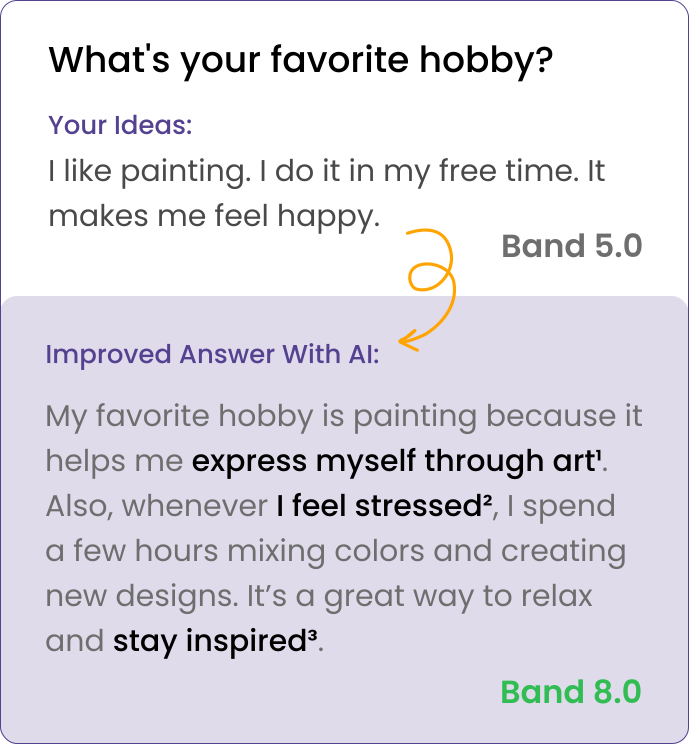
Practice IELTS Speaking answers in our free app
- Build personalized answers that match your target band.
- Turn short replies into fluent answers
- Let examiners fall in love with your answers!
Related Articles
Sample Answers
IELTS Speaking Part 1: Concentration Questions & Answers (Sep-Dec 2026)
Latest Sep-Dec 2026 IELTS Speaking Part 1 questions for Concentration. Read Band 9 sample answers, or use our AI app to turn your own ideas into perfect answers.
Sample Answers
IELTS Speaking Part 1: Jewelry Questions & Band 9 Answers (2026)
Latest Sep-Dec 2026 IELTS Speaking Part 1 questions for Jewelry. Read Band 9 sample answers or generate personal answers using our AI.
Sample Answers
IELTS Speaking Part 1: Colors Questions & Answers (Sep-Dec 2026)
Latest Sep-Dec 2026 IELTS Speaking Part 1 questions for Colors. Read Band 9 sample answers, or use our AI app to turn your own ideas into perfect answers.