Describe Your Favorite Song: Part 2 Cue Card (2026)
Use our AI to get a personalized Band 9 answer and vocabulary for the IELTS Speaking Part 2 Cue Card "Describe a song or piece of music you like".
Start Practicing →The "Describe a favorite song" or "Describe a piece of music you like" is one of the most popular 2026 Cue Cards in the Media category. To achieve Band 7+, you must avoid simply stating the genre and listing basic instruments. Instead, you should focus on the melody, the lyrics, and the emotional impact associated with this track using vocabulary like melancholic, poignant, and raw emotion.
How to Use This Sample Answer
Below is a sample answer for a music enthusiast who loves the emotional ballad "Someone Like You" by Adele. If this matches your choice, great. But what if you prefer an upbeat hip-hop track? Or a piece of classical piano music?
So here is the plan:
Read this sample answer to understand the structure of a Band 7+ answer.
Use the IELTS Speaking Lab App to instantly generate your own personal answer to this Cue Card with perfect vocabulary that describes your specific favorite song.
Part 2 Cue Card and Sample Answer
Describe a song or piece of music you like. You should say:
What the song is
When and where you first heard it
What the song is about
And explain why you like it so much.
Band 9 Sample Answer
Introduce: I would like to talk about a universally recognized ballad called "Someone Like You" by the renowned British singer Adele. Essentially, this is a deeply moving, melancholic piece of music that became a massive global hit a few years ago. It is a track I have always held in high regard because of its sheer emotional power.
Describe: I originally stumbled upon this masterpiece a few years ago while browsing the internet for new artists. Musically, it features a stripped-down, soulful piano melody accompanied solely by her powerful vocal range, making it incredibly striking in its simplicity. The lyrics are incredibly poignant, narrating a story of heartbreak, nostalgia, and the painful process of coming to terms with the end of a meaningful relationship.
Explain: The main reason I value this track so much is its ability to help me decompress. During intense study sessions or after a stressful day of work, putting on my headphones and letting this soothing melody wash over me in the comfort of my home serves as the perfect emotional release. Instead of relying on heavy electronic beats, it utilizes raw emotion and acoustic resonance to ensure you actually feel the weight of the words long-term.
Add impact: Ultimately, sharing this track with my friends and family has been immensely gratifying. It provides a sense of comfort that keeps me grounded and helps me manage my daily routine. The way it captures human vulnerability transcends language barriers, leaving a lasting impression on absolutely anyone who hears it.
This answer uses the IDEA Strategy (Introduce, Describe, Explain, Add impact).
Part 3 Questions and Sample Answers
After you finish your Cue Card, the examiner will ask you deeper questions related to music and culture.
1. What kinds of music do young people like in your country? Younger generations tend to gravitate towards pop, hip-hop, and EDM. They generally prefer songs with an upbeat tempo and catchy hooks that they can dance to. However, indie and alternative genres are also gaining mainstream appeal thanks to viral trends on video-sharing platforms.
2. Do you think music should be free? While free streaming makes art highly accessible, I believe musicians deserve fair compensation for their work. Producing high-quality audio requires expensive equipment and immense talent. If all platforms allowed piracy or free downloads, it would destroy the industry's intellectual property and discourage new artists from pursuing careers.
3. How has social media changed the way people find new songs? The shift has been massive. Music discovery is no longer limited to the radio; it now happens globally via social media platforms like TikTok and Instagram. Artists can showcase their tracks to a worldwide audience instantly. However, this also means the industry is more cut-throat, as musicians are competing for listeners' incredibly short attention spans.
4. Is traditional music still important today? Absolutely. Traditional music is a cornerstone of our cultural identity. Even though it faces competition from modern genres, it is essential to preserve our heritage. It bridges the generation gap, connecting modern youth with the struggles and celebrations of their ancestors during festivals and national holidays.
Key Vocabulary for IELTS Cue Card: Favorite Song
Here is the complete glossary of the vocabulary used in the answers above, plus extra high-level words relevant to this topic.
Accessible: (Adjective) Easy to find, obtain, or understand.
Catchy hooks: (Noun Phrase) A short, memorable phrase or melody in a song that stands out and is easy to remember.
Cultural identity: (Noun Phrase) The feeling of belonging to a group based on shared culture, history, and traditions.
Cut-throat: (Adjective) Fierce and intense; involving the use of ruthless measures.
Emotional release: (Noun Phrase) The experience of letting go of built-up stress or sadness, often triggered by art.
Fair compensation: (Noun Phrase) Receiving a just and proper amount of money for work or services provided.
Generation gap: (Noun Phrase) Differences in opinions, values, and tastes between younger and older generations.
Gratifying: (Adjective) Giving pleasure or satisfaction.
Held in high regard: (Phrase) Respected and admired deeply.
Intellectual property: (Noun Phrase) Intangible creations of the human intellect, such as music, literature, and inventions, protected by law.
Mainstream appeal: (Noun Phrase) Being popular or attractive to the general public rather than a niche group.
Melancholic: (Adjective) Feeling or expressing pensive sadness; mournful.
Nostalgia: (Noun) A sentimental longing or wistful affection for a period in the past.
Piracy: (Noun) The unauthorized use or reproduction of another's work.
Poignant: (Adjective) Evoking a keen sense of sadness or regret; deeply touching.
Powerful vocal range: (Noun Phrase) The ability of a singer to sing both very low and very high notes strongly.
Preserve our heritage: (Phrase) To protect and maintain traditions, languages, and art forms from the past.
Raw emotion: (Noun Phrase) Pure, unfiltered, and intense feelings.
Soothing melody: (Noun Phrase) A sequence of musical notes that has a calming or relaxing effect.
Soulful: (Adjective) Expressing deep feeling, often associated with a rich, emotional style of music.
Upbeat tempo: (Noun Phrase) A fast, lively, and energetic rhythm in a piece of music.
Create Your Own Band 9 Answers
The answer above is perfect—if you are a music enthusiast who loves emotional ballads. But what if you prefer upbeat rock? Or what if you listen to classical piano?
Your answers need to be true so that you can easily recall them during a stressful exam.
IELTS Speaking Lab helps you turn your real ideas into Band 9 answers.
Select your cue card - Describe a song or piece of music you like.
Input your rough idea (e.g., "I like 'Shape of You' because it is great for running").
Get personalized Band 9 answer instantly, with the perfect vocabulary for your story.
Not happy with these answers?
Change the core idea, band level difficulty, length and get a full glossary in our free app!
Start Practicing →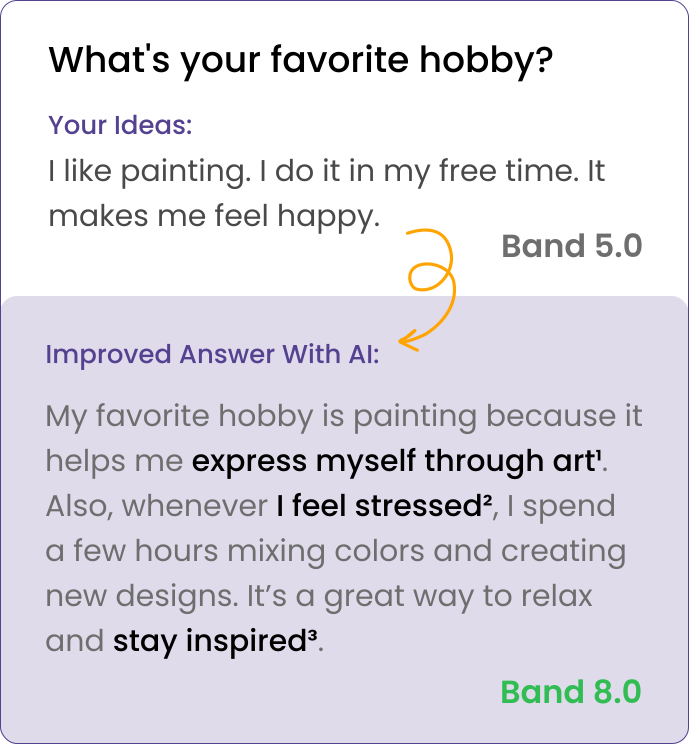
Practice IELTS Speaking answers in our free app
- Build personalized answers that match your target band.
- Turn short replies into fluent answers
- Let examiners fall in love with your answers!
Related Articles
Sample Answers
IELTS Speaking Part 1: Concentration Questions & Answers (Sep-Dec 2026)
Latest Sep-Dec 2026 IELTS Speaking Part 1 questions for Concentration. Read Band 9 sample answers, or use our AI app to turn your own ideas into perfect answers.
Sample Answers
IELTS Speaking Part 1: Jewelry Questions & Band 9 Answers (2026)
Latest Sep-Dec 2026 IELTS Speaking Part 1 questions for Jewelry. Read Band 9 sample answers or generate personal answers using our AI.
Sample Answers
IELTS Speaking Part 1: Colors Questions & Answers (Sep-Dec 2026)
Latest Sep-Dec 2026 IELTS Speaking Part 1 questions for Colors. Read Band 9 sample answers, or use our AI app to turn your own ideas into perfect answers.