IELTS Speaking Part 1: Buildings Questions & Band 9 Answers (2026)
Latest Sep-Dec 2026 IELTS Speaking Part 1 questions for Buildings. Read Band 9 sample answers or generate personal answers using our AI.
Start Practicing →Expect to see Buildings in your Sep-Dec 2026 IELTS speaking exam. The examiner might ask if you like looking at architecture, what kind of building you want to live in, or if you prefer old or modern structures. To score Band 9, avoid saying "The buildings are very tall." Instead, use natural, conversational phrases like shapes the skyline, pace of development, or subverted my expectations.
Latest Sep-Dec 2026: Buildings Questions & Sample Answers
1. Do you like looking at buildings?
Yes, I actually do. I live in a pretty big city, so I'm surrounded by high-rises. It's fascinating to see how the architecture shapes the skyline and gives different neighborhoods their own unique vibe.
2. Are there any historic buildings in your city?
Just a few, and they're getting harder to find. A lot of the older structures were torn down to make way for new apartments. It's a shame, because those old brick facades really have a lot of character.
3. Do you often photograph buildings?
I do it quite a bit, actually. When I'm out walking around downtown, I'll often snap a picture if a skyscraper catches my eye. I really like how the glass reflects the light late in the afternoon.
4. What kind of building would you like to live in?
Right now I'm in a pretty standard apartment, but my dream is to live in a renovated loft. Something with incredibly high ceilings and huge windows that let in plenty of natural light. That would be amazing.
5. Have the buildings in your hometown changed much?
Oh, completely. If you look at old pictures of my hometown, it used to be mostly low-rise residential areas. Now it's just packed with towering apartment blocks. The pace of development has been crazy.
6. Do you prefer old or modern buildings?
I like the look of both, but I'd much rather live or work in a modern one. I just prefer sleek designs that have smart technology built in. They feel a lot more practical for contemporary living.
7. Are there any famous buildings you want to visit?
Definitely. I’ve always wanted to see the Burj Khalifa in person. It’s such an iconic structure. Whenever I'm planning my next travel itinerary, looking for famous architecture is always a priority.
8. What makes a building attractive to you?
For me, it's about how well it blends into its surroundings. I don't like it when a massive, ugly concrete block is just dropped into a quiet neighborhood. A good building should fit the landscape nicely.
9. How do buildings affect people's moods?
Massively. If you're stuck in a dark, cramped office all day, it can be really depressing, especially if the weather is bad. On the other hand, open spaces with lots of natural light can completely lift your spirits.
10. Have you ever visited a building that surprised you?
Yes, there's a library near me that looks incredibly boring from the street. But inside, it has this stunning, open-concept atrium with a massive glass roof. It totally subverted my expectations.
11. Do you think preserving old buildings is important?
Up to a point, yes. They're a big part of our cultural heritage and give a city its identity. But at the same time, we shouldn't hold onto buildings that are falling apart or unsafe for occupancy.
12. Are tall buildings common in your country?
Extremely common. Space is at a premium in the big cities, so developers really have no choice but to build upwards. It's the only way to fit everyone in.
13. Would you like to design a building yourself?
Not really, no. I don't have the technical skills or the structural knowledge for that. But in my wildest dreams, I'd love to be an interior designer and focus on the inside spaces instead.
14. What kind of facilities should a good apartment building have?
Convenience is key. A solid residential complex needs reliable elevators, secure parking, and maybe a small gym. Having those basic amenities just makes daily life so much easier.
15. How will buildings change in the future?
I think sustainability is going to be the main focus. We'll probably see a lot more eco-friendly materials and buildings that run on solar power to reduce their carbon footprint.
16. Do you prefer buildings with lots of windows?
Absolutely. I hate feeling boxed in. An apartment with floor-to-ceiling windows lets in so much sunlight, making the whole space feel much bigger and more inviting. Dark rooms just make me feel sleepy.
17. Is there a building you visit frequently?
Yes, my local gym. It is located inside a massive commercial complex downtown. I go there almost every evening to work out and sometimes grab a coffee at the cafe on the ground floor.
18. What is the most traditional building in your hometown?
There is a beautiful old temple right in the city center. It has incredible intricate woodwork and a traditional curved roof. It is a really peaceful place to visit when you want to escape the city noise.
Key Vocabulary for IELTS Topic: Buildings
Basic amenities: Essential facilities or services, such as parking or a gym.
Blends into its surroundings: Looks natural and fitting in the environment where it is placed.
Brick facades: The front exterior walls of a building made from clay or brick.
Build upwards: To construct tall structures like skyscrapers to save ground space.
Carbon footprint: The amount of carbon dioxide released into the atmosphere as a result of activities.
Commercial complex: A large group of buildings that house businesses, shops, and offices.
Contemporary living: The lifestyle and needs of modern people.
Cramped office: A workspace that feels uncomfortably small and restricted.
Cultural heritage: The legacy of physical artifacts and attributes of a group or society.
Eco-friendly materials: Building supplies that do not harm the natural environment.
Floor-to-ceiling windows: Very large windows that cover an entire wall from the bottom to the top.
Iconic structure: A famous and highly impressive building.
Intricate woodwork: Highly detailed and complicated designs carved into wood.
Lift your spirits: To make you feel happier or more positive.
Low-rise residential areas: Neighborhoods with houses or buildings that are only one or two stories tall.
Open-concept atrium: A large, open-air or glass-covered space inside a building without dividing walls.
Pace of development: The speed at which a city expands and new buildings are constructed.
Renovated loft: A large, open apartment converted from an old industrial space.
Residential complex: A group of buildings designed specifically for people to live in.
Shapes the skyline: Determines the visual outline of a city against the sky.
Sleek designs: Smooth, modern, and attractive architectural styles.
Snap a picture: To take a photograph quickly and casually.
Space is at a premium: A situation where available land or room is very scarce and highly valuable.
Subverted my expectations: Completely changed or challenged what I thought was going to happen or be true.
Technical skills: The specific, practical abilities required to perform complex tasks.
Torn down to make way for: Demolished or destroyed so that something new can be built in its place.
Unsafe for occupancy: Too dangerous or structurally unsound for people to live or work in.
Create Your Own Band 9 Answers
IELTS Speaking Lab helps you turn your real ideas into Band 9 answers.
Select your topic/question - Buildings/Do you often photograph buildings?
Input your rough idea - "Yes, when I am traveling."
Get a personalized Band 9 answer instantly, with the perfect vocabulary for your story.
Not happy with these answers?
Change the core idea, band level difficulty, length and get a full glossary in our free app!
Start Practicing →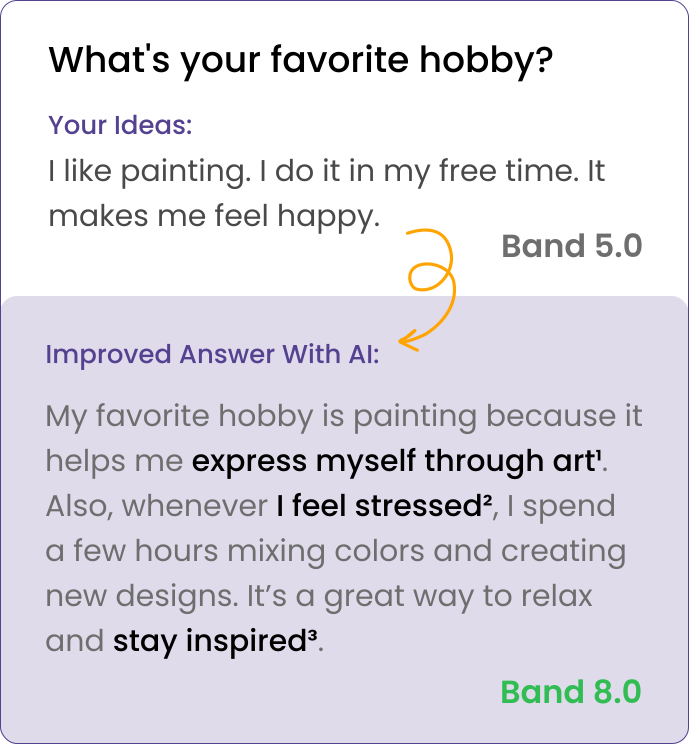
Practice IELTS Speaking answers in our free app
- Build personalized answers that match your target band.
- Turn short replies into fluent answers
- Let examiners fall in love with your answers!
Related Articles
Sample Answers
IELTS Speaking Part 1: Concentration Questions & Answers (Sep-Dec 2026)
Latest Sep-Dec 2026 IELTS Speaking Part 1 questions for Concentration. Read Band 9 sample answers, or use our AI app to turn your own ideas into perfect answers.
Sample Answers
IELTS Speaking Part 1: Jewelry Questions & Band 9 Answers (2026)
Latest Sep-Dec 2026 IELTS Speaking Part 1 questions for Jewelry. Read Band 9 sample answers or generate personal answers using our AI.
Sample Answers
IELTS Speaking Part 1: Colors Questions & Answers (Sep-Dec 2026)
Latest Sep-Dec 2026 IELTS Speaking Part 1 questions for Colors. Read Band 9 sample answers, or use our AI app to turn your own ideas into perfect answers.