IELTS Speaking Part 1: Tidiness Questions & Band 9 Answers (2026)
Latest Sep-Dec 2026 IELTS Speaking Part 1 questions for Tidiness. Read Band 9 sample answers or generate personal answers using our AI.
Start Practicing →Examiners are now asking about Tidiness in the Sep-Dec 2026 IELTS tests. They might ask if you are a tidy person, how you keep things clean, or if you are tidy at work. To score Band 9, avoid saying "I clean my room a lot." Instead, use natural, conversational phrases like spotless, clutter-free, or clean up my mess.
Latest Sep-Dec 2026: Tidiness Questions & Sample Answers
1. Are you a tidy person?
Yes, I try to be. I like keeping my home neat because a clutter-free environment really helps me think more clearly and stay focused.
2. How do you keep things tidy?
I usually do a quick tidy-up every evening. It’s part of my daily routine to put things back in their proper place before I go to bed.
3. Do you think people should be tidy all the time?
Not necessarily. It’s impossible to keep everything spotless all day long, but it is good to have a basic level of organization.
4. Are you tidier at work or at home?
Definitely at work. I share an office, so I make absolutely sure to clean up my mess immediately so I don't bother my colleagues.
5. Were you a tidy child?
Not at all. My room was a complete pigsty when I was younger, and my parents always had to force me to organize my toys.
6. Why do some people find it hard to be tidy?
I think people just get too busy. When you are rushing between study sessions and social events, organizing your desk is usually the last thing on your mind.
7. Is it important to teach children to be tidy?
Yes, absolutely. It teaches them basic responsibility and shows them how to take ownership of their own personal space early on.
8. Do you like a tidy environment?
I love it. Walking into a clean room instantly makes me feel relaxed and genuinely helps alleviate stress after a long day.
9. What do you do when your room is messy?
I usually wait until Saturday morning and then do a massive deep clean. I put on some music and just spend a few hours sorting everything out.
10. Do you throw things away when they get old?
Yes, I’m quite ruthless about getting rid of things. I hate hoarding, so if I haven't used something in a year, I just donate it.
11. Do you fold your clothes or hang them up?
I prefer to hang most of my clothes in the closet. It prevents them from getting wrinkled and just looks much more aesthetically pleasing.
12. How do you feel when you see a messy place?
It honestly makes me feel a bit anxious. I find it really hard to concentrate if my surroundings are completely chaotic.
13. Do you prefer a tidy desk when you work?
Yes, I need a completely blank slate before I start typing. Even a few stray papers or coffee cups can completely distract me.
14. Who usually does the cleaning in your house?
We actually split the chores evenly. We have a simple cleaning roster on the fridge so everyone knows exactly what they need to do each week.
15. Do you use any tools to keep things organized?
I use a lot of cheap storage bins and drawer dividers. They are very simple but make a massive difference in keeping small items sorted.
16. Do you keep your digital files organized?
Yes, my computer desktop is completely empty. If I have random files everywhere, it completely ruins my concentration. I use strict naming conventions for my folders so I can find everything instantly.
17. Are there any places you don't mind being messy?
My garage is a complete exception to my rules. It’s an absolute dumping ground for old boxes and tools. Since I don't spend much time in there, the mess doesn't bother me at all.
18. What is the hardest part of keeping things tidy?
For me, the hardest part is dealing with daily paper clutter. Mail, receipts, and random sticky notes pile up on the counter so quickly, and it takes constant effort to file them away properly.
Key Vocabulary for IELTS Topic: Tidiness
Aesthetically pleasing: Beautiful or pleasing to look at.
Alleviate stress: To make worry or tension less severe.
Blank slate: A clean surface or starting point with no distractions.
Chaotic: In a state of complete confusion and disorder.
Clean up my mess: To tidy up a dirty or untidy place that you created.
Cleaning roster: A schedule that shows who is responsible for doing specific chores.
Clutter-free: A space that is neat and has no unnecessary items lying around.
Deep clean: A very thorough and detailed cleaning of a room or house.
Dumping ground: A place where things are carelessly left or stored.
Hoarding: Collecting and keeping large amounts of things that are often not needed.
Naming conventions: A consistent set of rules for naming computer files or folders.
Paper clutter: An untidy collection of papers, mail, and receipts.
Pigsty: A very dirty, messy, or untidy place.
Spotless: Perfectly clean, with no dirt or marks at all.
Storage bins: Containers used to organize and keep items out of the way.
Take ownership: To accept responsibility for something.
Tidy-up: A quick session of cleaning and organizing things.
Create Your Own Band 9 Answers
IELTS Speaking Lab helps you turn your real ideas into Band 9 answers.
Select your topic/question - Tidiness/What do you do when your room is messy?
Input your rough idea - "I try not to leave clothes everywhere."
Get a personalized Band 9 answer instantly, with the perfect vocabulary for your story.
Not happy with these answers?
Change the core idea, band level difficulty, length and get a full glossary in our free app!
Start Practicing →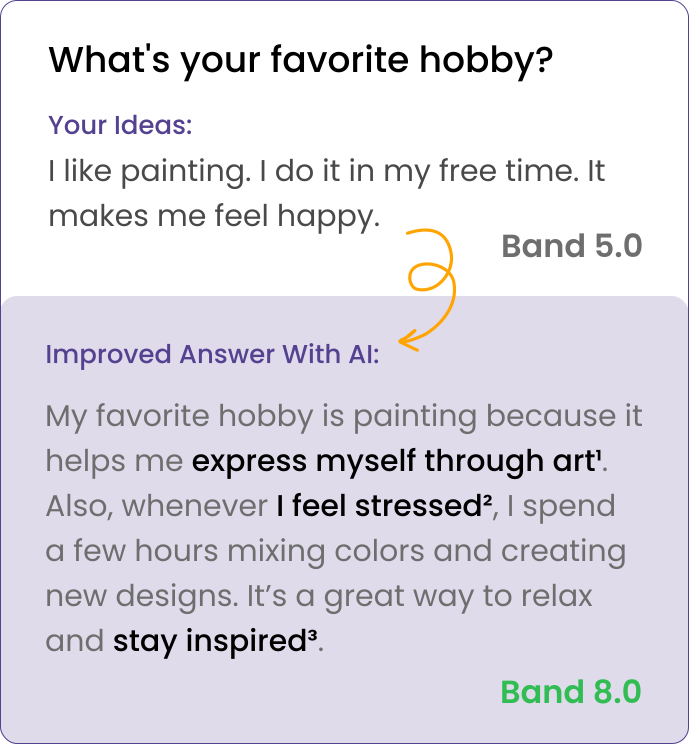
Practice IELTS Speaking answers in our free app
- Build personalized answers that match your target band.
- Turn short replies into fluent answers
- Let examiners fall in love with your answers!
Related Articles
Sample Answers
IELTS Speaking Part 1: Concentration Questions & Answers (Sep-Dec 2026)
Latest Sep-Dec 2026 IELTS Speaking Part 1 questions for Concentration. Read Band 9 sample answers, or use our AI app to turn your own ideas into perfect answers.
Sample Answers
IELTS Speaking Part 1: Jewelry Questions & Band 9 Answers (2026)
Latest Sep-Dec 2026 IELTS Speaking Part 1 questions for Jewelry. Read Band 9 sample answers or generate personal answers using our AI.
Sample Answers
IELTS Speaking Part 1: Colors Questions & Answers (Sep-Dec 2026)
Latest Sep-Dec 2026 IELTS Speaking Part 1 questions for Colors. Read Band 9 sample answers, or use our AI app to turn your own ideas into perfect answers.