IELTS Speaking Part 1: Days Off Questions & Band 9 Answers (2026)
Stop memorizing generic answers. Use our AI tools to get personalized Band 9 answers and vocabulary to talk about days off, relaxing, and free time.
Start Practicing →Days Off is a very common topic in the IELTS exam. The examiner might ask how you spend your free time, if you prefer to go out or stay in, and if you think people get enough rest. To score Band 9, avoid saying "I sleep a lot." Instead, use words like downtime, burnout, recharge my batteries, or sedentary to describe your habits clearly.
How to Use These Sample Answers
Below are the latest 2026 questions for "Days Off."
Important: These answers are for a person who is usually exhausted from work and prefers to stay home. They like quiet weekends, avoid loud parties, and use their days off strictly to rest and recover.
But if you spend your weekends doing extreme sports, or if you go clubbing every single night, these answers are probably not for you.
So, here is the plan:
Read these samples to understand the Band 9 structure.
Use the IELTS Speaking Lab App to get personalized answers. It gives you perfect vocabulary that fits your real life.
Part 1: Questions & Model Answers about Days Off
1. Do you have many days off?
I typically get the standard two-day weekend. Since my job is quite demanding, I am usually utterly exhausted by Friday evening. Therefore, I desperately need those days off to recharge my batteries and catch up on my severe sleep deficit.
2. What do you usually do on your days off?
I highly value my downtime, so I like to keep things simple. I usually engage in quiet hobbies like reading fiction or doing indoor gardening. I actively try to avoid anything that requires too much mental or physical effort.
3. Do you usually spend your days off with your parents or friends?
I usually spend them alone or with immediate family. My weekdays are filled with constant, draining social interaction at work. Because of this, I prefer solitary activities on the weekends to decompress and enjoy some peace and quiet.
4. What would you like to do if you had more days off?
If I had a longer stretch of free time, I would definitely travel more often. Taking a short, relaxing city break would be a wonderful way to escape my mundane routine, provided the itinerary isn't too exhausting.
5. Do you prefer to relax or be active on your days off?
I definitely prefer a sedentary weekend. The idea of waking up early for vigorous physical exertion, like going for a long run, sounds like an absolute nightmare when I am just trying to rest my body.
6. How do you feel when your day off is over?
I often experience a mild case of the Sunday blues on Sunday evening. However, if I have rested properly and completely disconnected from my emails, I generally feel rejuvenated and prepared to tackle the workweek ahead.
7. Are days off important?
They are absolutely imperative for everyone. Without regular breaks, employees quickly suffer from severe burnout, which drastically reduces productivity and negatively impacts their overall physical and mental health.
8. What did you do on your last day off?
It was very uneventful, which is exactly how I like it. I slowly caught up on a backlog of domestic chores in the morning, and then spent the entire afternoon binge-watching a new historical documentary series on the couch.
9. Do you like to go out on your days off?
It heavily depends on the weather. If it is mild and sunny, I might take a short stroll in the local park. But during inclement weather, I strongly prefer to stay indoors wrapped in a warm blanket with a good book.
10. Do you listen to music on your days off?
Yes, constantly. I find that playing soft, ambient music in the background is incredibly therapeutic. It really helps to create a soothing, stress-free atmosphere in my apartment while I relax.
11. Is it easy for you to relax on your days off?
Not always, to be honest. Sometimes it takes me a full day just to unwind and stop worrying about pending tasks. Intrusive thoughts about upcoming deadlines can occasionally be surprisingly hard to switch off.
12. Do you think people have enough days off in your country?
Unfortunately, no. We have a notoriously workaholic culture here. I do not believe the statutory minimum leave is adequate to provide workers with a meaningful respite from their highly demanding jobs.
Key Vocabulary for IELTS Topic: Days Off
Here is the complete glossary of every bolded word and phrase used in the answers above.
Adequate: Satisfactory or acceptable in quality or quantity.
Binge-watching: Watching multiple episodes of a television program in rapid succession.
Burnout: Physical or mental collapse caused by overwork or stress.
Domestic chores: Routine tasks, especially household ones like cleaning, cooking, or washing.
Downtime: Time during which a person relaxes and is not doing any active work.
Exertion: Physical or mental effort.
Imperative: Of vital importance; crucial.
Inclement: (Of the weather) unpleasantly cold, wet, or stormy.
Intrusive thoughts: Unwanted, involuntary thoughts or images that can cause distress or distraction.
Recharge my batteries: To regain one's energy and strength by resting and relaxing.
Rejuvenated: Made to look or feel younger, fresher, or more lively.
Respite: A short period of rest or relief from something difficult or unpleasant.
Sedentary: Tending to spend much time seated; somewhat inactive.
Solitary: Done or existing alone.
Sunday blues: A feeling of anxiety or depression that occurs on a Sunday afternoon or evening in anticipation of the workweek.
Therapeutic: Having a good effect on the body or mind; contributing to a sense of well-being.
Unwind: To relax after a period of work or tension.
Workaholic: A person who compulsively works hard and long hours.
Create Your Own Band 9 Answers
The answers above are perfect—if you are a person who prefers quiet weekends to recover from work. But what if you spend every weekend playing competitive sports? Or what if you use your days off to go to loud music festivals?
Your answers need to be true so that you can easily recall them during a stressful exam.
IELTS Speaking Lab helps you turn your real ideas into Band 9 answers.
Select your topic - Days Off.
Input your rough idea (e.g., "I spend all my days off hiking in the mountains with my dog").
Get personalized Band 9 answers instantly, with the perfect vocabulary for your story.
Not happy with these answers?
Change the core idea, band level difficulty, length and get a full glossary in our free app!
Start Practicing →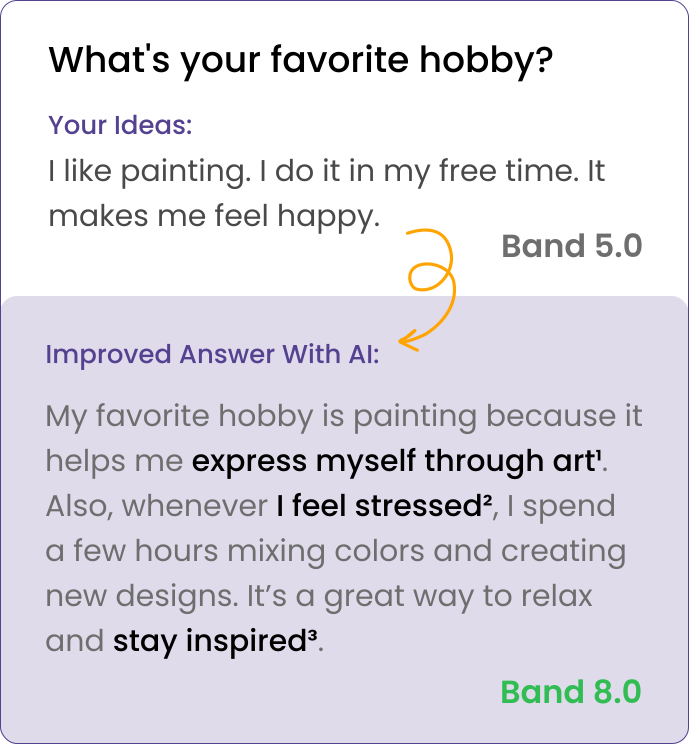
Practice IELTS Speaking answers in our free app
- Build personalized answers that match your target band.
- Turn short replies into fluent answers
- Let examiners fall in love with your answers!
Related Articles
Sample Answers
IELTS Speaking Part 1: Concentration Questions & Answers (Sep-Dec 2026)
Latest Sep-Dec 2026 IELTS Speaking Part 1 questions for Concentration. Read Band 9 sample answers, or use our AI app to turn your own ideas into perfect answers.
Sample Answers
IELTS Speaking Part 1: Jewelry Questions & Band 9 Answers (2026)
Latest Sep-Dec 2026 IELTS Speaking Part 1 questions for Jewelry. Read Band 9 sample answers or generate personal answers using our AI.
Sample Answers
IELTS Speaking Part 1: Colors Questions & Answers (Sep-Dec 2026)
Latest Sep-Dec 2026 IELTS Speaking Part 1 questions for Colors. Read Band 9 sample answers, or use our AI app to turn your own ideas into perfect answers.