IELTS Speaking Part 1: Museums Questions & Sample Answers (2026)
Stop memorizing generic answers. Use our AI tools to get personalized Band 9 answers and vocabulary to talk about history, art, and local exhibitions.
Start Practicing →Watch out for Museums, a brand-new and highly frequent question set in the 2026 IELTS speaking exam. The examiner might ask if you like visiting them, what kind you prefer, or if they should be free for everyone. To score Band 9, avoid saying "Museums are interesting." Instead, use conversational phrases like soak in some local art, stuffy and outdated, or cultural repositories to sound natural and fluent.
How to Use These Sample Answers
Below are the latest 2026 questions for "Museums."
Important: These answers are for a person who lives in a busy city like Mumbai, loves art and history, and goes to museums to escape the heat and noise of the streets.
But if you never go to museums because they are boring, or if you only visit science museums with interactive robots, these answers are probably not for you.
So, here is the plan:
Read these sample answers to understand the Band 9 structure.
Use the IELTS Speaking Lab App to get personalized answers. It gives you perfect vocabulary that fits your real life.
Part 1: Questions & Sample Answers about Museums
1. Do you think museums are important?
Absolutely. They act as essential cultural repositories that preserve our history and heritage. In a fast-paced, chaotic city like Mumbai, they remind us of where we came from and really help to ground us in the present.
2. Are there many museums in your hometown?
Yes, quite a few. Mumbai has a very rich colonial history, so places like the CSMVS museum are huge landmarks. I usually do a lot of walking around the Fort area when I visit them because the heritage architecture is just breathtaking.
3. Do you often visit museums? Not as much as I'd like, honestly. The traffic here can be an absolute nightmare, so I usually save my cultural trips for long weekends or national holidays. That way, the roads are a bit more manageable and I can really take my time.
4. When was the last time you visited a museum?
Just last month, actually. I went to the Dr. Bhau Daji Lad Museum in Byculla. It was a fantastic way to escape the sweltering heat and just soak in some local art for the entire afternoon.
5. Do you think museums should be free?
I'm somewhat torn on this issue. On one hand, making them free ensures equal access for everyone, regardless of their income. But on the other hand, these massive buildings need funding for maintenance, so a small, nominal fee feels like a fair compromise.
6. What kind of museums do you like the most?
I'm definitely drawn to contemporary art and design museums. Historical artifacts are great, but seeing modern art really sparks my imagination and always gives me a fresh perspective on Indian society today.
7. Did you visit museums when you were a child?
Yes, constantly. My parents made it a point to expose me to culture early on. It was a staple weekend activity for our family, though if I am being honest, as a kid, I mostly just enjoyed the grand staircases and running down the massive hallways.
8. Is it better to visit museums alone or with others?
I strongly prefer going solo. It allows me to go completely at my own pace. I can spend twenty minutes staring at a single painting without feeling anxious that I'm holding someone up.
9. Do people in your country like visiting museums?
It is a bit of a mixed bag. A lot of tourists flock to them, but locals often overlook them in favor of going to the cinema or shopping malls. I think traditional public places sometimes struggle to compete with modern, high-energy entertainment venues.
10. What can people learn from visiting a museum?
Beyond just memorizing dates and facts, you gain a deep sense of context. You begin to understand exactly how a city evolved, which gives you a much richer appreciation for the cultural fabric of the society you live in.
11. How can museums attract more visitors?
They definitely need to become more interactive. Static displays in glass boxes can feel a bit stuffy and outdated to the younger generation. Incorporating virtual reality or hosting live weekend workshops would undoubtedly draw a bigger crowd.
12. Do you think museums will be replaced by the internet?
Not entirely. While you can easily view a high-resolution image online, it completely lacks the tangible atmosphere of seeing a centuries-old artifact in person. Plus, ducking into a quiet gallery is a great way to avoid crowded places and experience a moment of quiet reflection.
13. What is the most famous museum in your city?
The Chhatrapati Shivaji Maharaj Vastu Sangrahalaya is by far the most iconic. It’s right in the heart of South Mumbai and is a true architectural marvel that perfectly blends Indian and British design elements.
14. Do you buy souvenirs from museums?
Occasionally, but I actively try to avoid the overpriced trinkets they sell at the front desk. If I spot a beautifully illustrated book about the current exhibits, I might pick it up on my days off to read at a local cafe later.
15. How do you feel after visiting a museum?
I usually feel incredibly mentally stimulated but physically exhausted. It is a massive amount of visual information to process at once, so the "museum fatigue" is very real, but it’s always a highly rewarding experience.
Key Vocabulary for IELTS Topic: Museums
Here is the complete glossary of every bolded word and phrase used in the answers above.
Architectural marvel: An amazing or wonderful building or structure.
At my own pace: Doing something as slowly or quickly as you want to do it.
Breathtaking: Astonishing or awe-inspiring in quality, so as to take one's breath away.
Cultural fabric: The shared history, traditions, and arts that make up a society.
Cultural repositories: Places where items of cultural, historical, or artistic value are kept safely.
Draw a bigger crowd: To attract a large number of people to an event or place.
Equal access for everyone: The right for all people to use or experience something, regardless of background or wealth.
Escape the sweltering heat: To get away from uncomfortably hot weather.
Fair compromise: An agreement where both sides make concessions that feel reasonable and just.
Fresh perspective: A new and different way of looking at a situation or subject.
Ground us in the present: To help someone feel steady and connected to current reality by understanding the past.
Holding someone up: Delaying someone or making them wait.
Mentally stimulated: Feeling that your mind is active, interested, and engaged by new ideas.
Overpriced trinkets: Small ornaments or items of jewelry that are of little value but cost too much.
Rewarding experience: An activity that makes you feel satisfied that you have done something important or useful.
Sense of context: An understanding of the background and circumstances surrounding an event or object.
Soak in some local art: To spend time looking at and appreciating art made by people from that specific area.
Sparks my imagination: Causes a sudden burst of creative thought or ideas.
Stuffy and outdated: Lacking fresh air or interesting new ideas; old-fashioned and boring.
Take my time: To do something without hurrying.
Tangible atmosphere: A mood or feeling in a place that is so strong you can almost physically feel it.
Torn on this issue: Finding it difficult to choose between two different opinions or options.
Create Your Own Band 9 Answers
The sample answers above are perfect—if you are a person who lives in a busy city like Mumbai, loves art and history, and goes to museums to escape the heat and noise of the streets. But what if you never go to museums because they are boring? Or what if you only visit science museums with interactive robots?
Your answers need to be true so that you can easily recall them during a stressful exam.
IELTS Speaking Lab helps you turn your real ideas into Band 9 sample answers.
Select your topic - Museums.
Input your rough idea (e.g., "I never go to museums because I prefer playing sports outside").
Get personalized Band 9 answers instantly, with the perfect vocabulary for your story.
Not happy with these answers?
Change the core idea, band level difficulty, length and get a full glossary in our free app!
Start Practicing →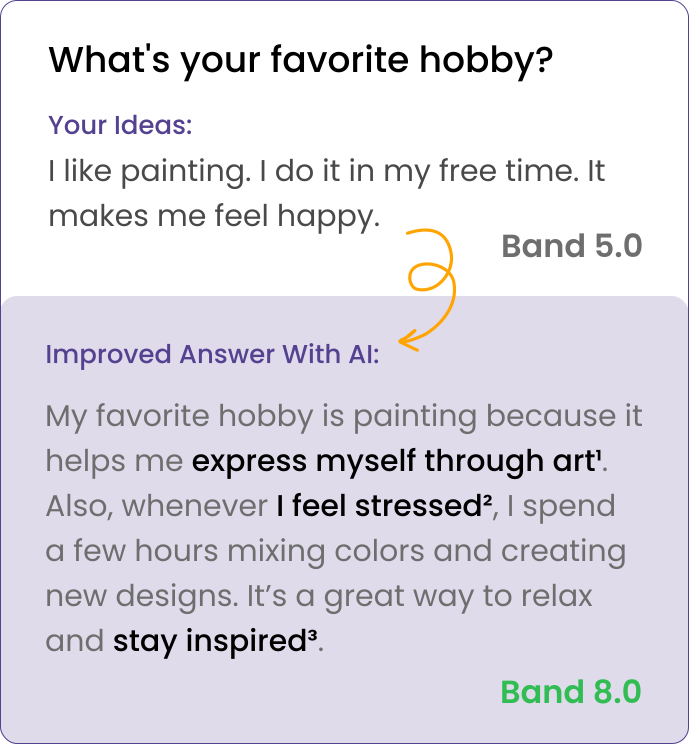
Practice IELTS Speaking answers in our free app
- Build personalized answers that match your target band.
- Turn short replies into fluent answers
- Let examiners fall in love with your answers!
Related Articles
Sample Answers
IELTS Speaking Part 1: Concentration Questions & Answers (Sep-Dec 2026)
Latest Sep-Dec 2026 IELTS Speaking Part 1 questions for Concentration. Read Band 9 sample answers, or use our AI app to turn your own ideas into perfect answers.
Sample Answers
IELTS Speaking Part 1: Jewelry Questions & Band 9 Answers (2026)
Latest Sep-Dec 2026 IELTS Speaking Part 1 questions for Jewelry. Read Band 9 sample answers or generate personal answers using our AI.
Sample Answers
IELTS Speaking Part 1: Colors Questions & Answers (Sep-Dec 2026)
Latest Sep-Dec 2026 IELTS Speaking Part 1 questions for Colors. Read Band 9 sample answers, or use our AI app to turn your own ideas into perfect answers.