IELTS Speaking Part 1: Concentration Questions & Answers (Sep-Dec 2026)
Latest Sep-Dec 2026 IELTS Speaking Part 1 questions for Concentration. Read Band 9 sample answers, or use our AI app to turn your own ideas into perfect answers.
Start Practicing →Prepare for Concentration in your Sep-Dec 2026 IELTS test. The examiner might ask when you need to concentrate, if it's hard for you to focus, or what distracts you. To score Band 9, avoid saying "It is hard to focus." Instead, use natural, conversational vocabulary like sidetracked, immersed, or daydream.
Part 1: Questions & Sample Answers about Concentration
1. Is it difficult for you to concentrate?
It depends entirely on the task at hand. If I am doing something I enjoy, I can easily stay focused, but for boring administrative work, my mind tends to wander pretty quickly.
2. When do you need to concentrate the most?
I need absolute focus when I am studying for exams or writing important reports. A single mistake could be costly, so I have to be completely immersed in what I am doing.
3. What helps you concentrate?
Listening to instrumental music or white noise is incredibly helpful for me. It blocks out background chatter and puts me in a highly productive headspace.
4. What distracts you when you are trying to focus?
My smartphone is definitely the biggest culprit. The constant pinging from social media notifications easily breaks my concentration and leaves me completely sidetracked.
5. Do you think people can do two things at the same time?
While many people claim they can multitask, I think it is mostly an illusion. Trying to do two complex tasks simultaneously usually just leads to poor results and mental fatigue.
6. Is it easier to concentrate in a quiet or noisy place?
I definitely prefer complete silence when I need to get things done. Even minor background noises at home can be extremely disruptive when I am trying to read a difficult text.
7. How do you feel when someone interrupts you?
I find it incredibly frustrating, especially if I am in the middle of a complex thought process. It takes me a lot of time to regain my focus and get back into the flow of my work.
8. Did you find it easy to concentrate when you were a child?
Not at all, as I was extremely energetic and had a very short attention span. Sitting still in a classroom was a constant struggle because I would easily daydream during long lessons.
9. Have your concentration skills improved as you have gotten older?
Yes, significantly. As I progressed through various life stages, I developed better self-discipline and mental stamina, making it much easier to tackle long projects.
10. Do you ever lose concentration when you are listening to someone?
I have to admit that I do, especially if the topic is incredibly dry or repetitive. If the speaker lacks energy, my thoughts inevitably start to drift toward what I need to do later that day.
11. How can employers help their staff concentrate better?
Companies should provide quiet zones where employees can escape the noise of open-plan offices. Allowing flexible schedules or occasional days off also prevents burnout and improves overall productivity.
12. Does the environment affect your ability to focus?
Absolutely. If I am trying to work at a messy desk with poor lighting, my thoughts immediately become scatterbrained and I achieve very little.
13. What time of day is your concentration best?
I am definitely at my sharpest during the morning time, right after a good cup of coffee. By the late afternoon, my energy levels usually crash and I struggle to retain new information.
14. Do you use any apps to help you concentrate?
Yes, I use a timer on my technology devices to break my work into short, manageable intervals. It forces me to focus intensely for twenty-five minutes before taking a well-deserved breather.
15. Can playing games or doing puzzles improve concentration?
I believe so, because things like Sudoku or chess force you to think strategically. Regularly challenging your brain with difficult logic games can definitely sharpen your cognitive faculties.
Key Vocabulary for IELTS Topic: Concentration
Breather: A short pause for rest.
Daydream: To be lost in pleasant thoughts instead of paying attention.
Disruptive: Causing trouble and stopping something from continuing normally.
Drift: To slowly lose focus or move away from the main subject.
Faculties: Mental abilities or powers.
Fatigue: Extreme tiredness resulting from mental or physical exertion.
Flow: A state of smooth, continuous, and highly focused progress.
Headspace: A person's state of mind or mindset.
Immersed: Deeply involved or absorbed in an activity.
Productivity: The rate or efficiency at which work is completed.
Scatterbrained: Disorganized and lacking concentration.
Sharpest: Having a clear, quick, and highly alert mind.
Sidetracked: Distracted from the main subject or goal.
Stamina: The ability to sustain mental effort for long periods.
Wander: To lose concentration and start thinking about other things.
Create Your Own Band 9 Answers
IELTS Speaking Lab helps you turn your real ideas into Band 9 sample answers.
Select your topic/Question - Concentration / Is it difficult for you to concentrate?
Input your rough idea (e.g., "It's easy if I am at home.").
Get personalized Band 9 answers instantly, with the perfect vocabulary for your story.
Not happy with these answers?
Change the core idea, band level difficulty, length and get a full glossary in our free app!
Start Practicing →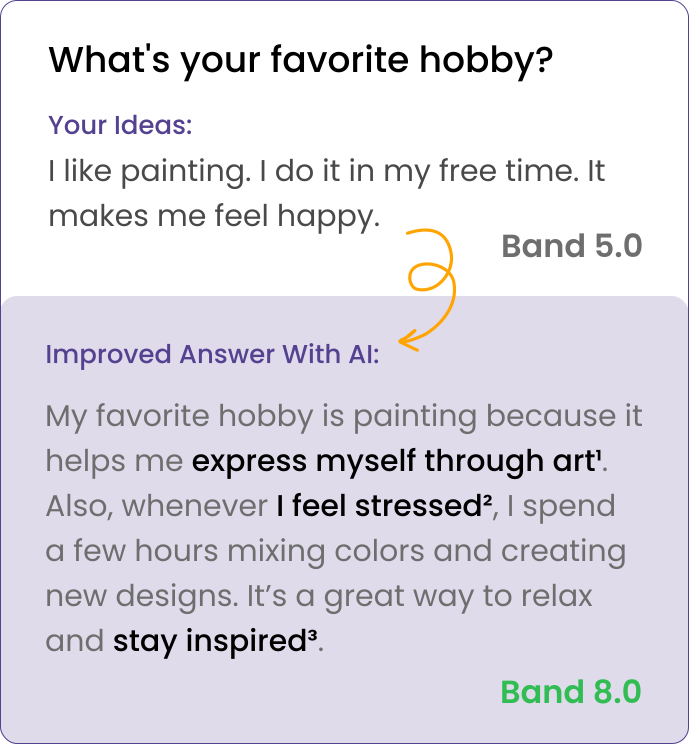
Practice IELTS Speaking answers in our free app
- Build personalized answers that match your target band.
- Turn short replies into fluent answers
- Let examiners fall in love with your answers!
Related Articles
Sample Answers
IELTS Speaking Part 1: Jewelry Questions & Band 9 Answers (2026)
Latest Sep-Dec 2026 IELTS Speaking Part 1 questions for Jewelry. Read Band 9 sample answers or generate personal answers using our AI.
Sample Answers
IELTS Speaking Part 1: Colors Questions & Answers (Sep-Dec 2026)
Latest Sep-Dec 2026 IELTS Speaking Part 1 questions for Colors. Read Band 9 sample answers, or use our AI app to turn your own ideas into perfect answers.
Sample Answers
IELTS Speaking Part 1: Websites Questions & Answers (Sep-Dec 2026)
Latest Sep-Dec 2026 IELTS Speaking Part 1 questions for Websites. Read Band 9 sample answers, or use our AI app to turn your own ideas into perfect answers.