Describe a Healthy Habit You Want to Start: Part 2 Cue Card (2026)
Use our AI to get a personalized Band 9 answer and vocabulary for the IELTS Speaking Part 2 Cue Card "Describe a healthy habit you want to start".
Start Practicing →The "Describe a healthy habit you want to start" Cue Card is a highly common topic in the Future Plans category. The biggest trap here is grammar. Examiners are specifically listening for your ability to use future forms and conditionals (like "I plan to," "I am going to," or "If I do this, it would..."), alongside high-level vocabulary related to wellness and self-improvement.
How to Use This Sample Answer
Below is a high-scoring sample answer for someone planning to start a home-based Pilates and yoga routine. If this matches your wellness goals, you can comfortably borrow these exact phrases.
Here is the game plan:
Read this sample response to understand the logical structure of a Band 7+ response.
Use the IELTS Speaking Lab App to instantly generate your own personal answer to this Cue Card, tailored to a habit you genuinely want to build, whether that is morning jogging, meal prepping, or digital detoxing.
Part 2 Cue Card and Sample Answer
Describe a healthy habit you want to start. You should say:
What the habit is
When you want to start it
How you will do it
And explain why you want to start this habit.
Band 9 Sample Answer
Describe: I would like to talk about a major lifestyle change I have been meaning to implement for a while now: starting a daily yoga and Pilates routine. My goal is to roll out my mat in the comfort of my own home every single morning before the day gets away from me.
Add Detail: I plan to kick this off at the start of next month. To make it sustainable, I am not going to sign up for an expensive, intimidating fitness studio. Instead, I want to follow guided online tutorials. I figure all I need is a decent yoga mat and a bit of discipline to carve out just twenty minutes a day.
Link to Self: The primary reason I need this is because I currently lead a highly sedentary lifestyle. Between staring at screens and working at a desk, my posture has taken a massive hit, and my overall health and stamina aren't where I want them to be. I need a low-impact workout that builds core strength and restores my flexibility without causing joint pain.
Example: If I can actually stick to this, I imagine it will completely transform my mornings. Instead of waking up and falling into the trap of mindless scrolling, I would stretch, practice a bit of mindfulness, and then prepare some wholesome food for breakfast. I genuinely hope it evolves into one of my most relaxing hobbies rather than feeling like an obligatory chore, helping me set a positive tone for whatever challenges lie ahead.
This answer uses the DALE Strategy (Describe, Add detail, Link to self, Example).
Part 3 Questions and Sample Answers
After you finish your Cue Card, the examiner will ask you deeper questions related to public health, exercise, and modern lifestyles.
1. Why do so many people find it hard to maintain healthy habits?
I think the main culprit is our addiction to instant gratification. We live in a world where everything is fast and easy, but building a healthy body takes months of invisible effort. Furthermore, people often lack intrinsic motivation; they start a diet or exercise regime to look good for a specific event, rather than focusing on long-term wellness. Once the event passes, the habit disappears.
2. What role should the government play in promoting public health?
Governments have a massive responsibility here. They should invest heavily in creating accessible recreational facilities like public parks and free outdoor gyms. Additionally, they need to run aggressive public awareness campaigns about the dangers of processed sugar and junk food, perhaps even subsidizing fresh produce so that eating well isn't a luxury reserved only for the wealthy.
3. Do you think modern technology has made us healthier or unhealthier?
It is definitely a double-edged sword. On one hand, we have amazing fitness trackers and diet apps that make monitoring our health incredibly easy. On the other hand, technology has chained us to our desks, leading to severe screen fatigue and a lack of daily movement.
4. Is physical health more important than mental health?
Not at all; I believe they are inextricably linked. You cannot have one without the other. If you are physically sick, your mental state will inevitably deteriorate. Conversely, chronic stress and anxiety can manifest as physical illnesses. True wellness requires holistic well-being, treating the mind and body as one connected system.
Key Vocabulary for IELTS Cue Card: Healthy Habit
Here is the complete glossary of the vocabulary used in the answers above, plus extra high-level collocations relevant to fitness and lifestyle.
Carve out: To successfully create or get something, especially time or space, with effort.
Core strength: The physical strength of the muscles in the abdomen and back, which support the spine and pelvis.
Flexibility: The quality of bending easily without breaking; the range of motion in a joint.
Holistic well-being: An approach to health that considers the whole person—body, mind, spirit, and emotions.
Inextricably linked: Connected in a way that makes it impossible to separate them.
Instant gratification: The desire to experience pleasure or fulfillment without any delay or deferment.
Intrinsic motivation: The drive to do something because it is naturally satisfying to you, not because of an external reward.
Kick this off: To begin or start something.
Lifestyle change: A fundamental shift in the way a person lives, eats, or behaves.
Low-impact workout: Exercise that is gentle on the joints and fluid in motion, like swimming or yoga.
Mindfulness: A mental state achieved by focusing one's awareness on the present moment, calmly acknowledging one's feelings and thoughts.
Mindless scrolling: The act of continuously looking through social media feeds without any real purpose or attention.
Processed sugar: Sugars that have been extracted and refined from their original source, often added to junk food.
Recreational facilities: Places or amenities designed for leisure, exercise, and sports.
Screen fatigue: Physical and mental exhaustion caused by looking at digital displays for too long.
Sedentary lifestyle: A type of lifestyle involving little or no physical activity.
Set a positive tone: To establish a good, optimistic mood or attitude for the future.
Create Your Own Band 9 Answers
The sample above is a fantastic model if you are actually planning to start a yoga or Pilates routine. But your exam answer must be authentic so you can speak fluently and continuously for two minutes.
What if your goal is to start meal-prepping on Sundays? Or to take up swimming to fix a bad back?
IELTS Speaking Lab helps you turn your actual personal goals into Band 9 answers.
Select your cue card - Describe a healthy habit you want to start.
Input your rough idea (e.g., "I want to start jogging every morning to lose weight").
Get your personalized Band 9 answer instantly, with the perfect vocabulary built right in.
Not happy with these answers?
Change the core idea, band level difficulty, length and get a full glossary in our free app!
Start Practicing →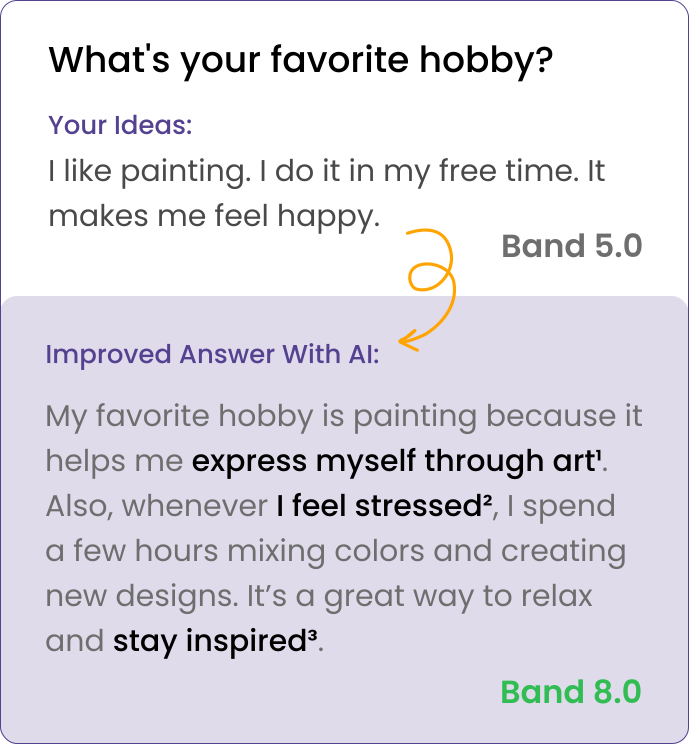
Practice IELTS Speaking answers in our free app
- Build personalized answers that match your target band.
- Turn short replies into fluent answers
- Let examiners fall in love with your answers!
Related Articles
Sample Answers
IELTS Speaking Part 1: Concentration Questions & Answers (Sep-Dec 2026)
Latest Sep-Dec 2026 IELTS Speaking Part 1 questions for Concentration. Read Band 9 sample answers, or use our AI app to turn your own ideas into perfect answers.
Sample Answers
IELTS Speaking Part 1: Jewelry Questions & Band 9 Answers (2026)
Latest Sep-Dec 2026 IELTS Speaking Part 1 questions for Jewelry. Read Band 9 sample answers or generate personal answers using our AI.
Sample Answers
IELTS Speaking Part 1: Colors Questions & Answers (Sep-Dec 2026)
Latest Sep-Dec 2026 IELTS Speaking Part 1 questions for Colors. Read Band 9 sample answers, or use our AI app to turn your own ideas into perfect answers.