Describe a Historical Building You've Been To: Part 2 Cue Card (2026)
Use our AI to get a personalized Band 9 answer and vocabulary for the IELTS Speaking Part 2 Cue Card "Describe a historical building you've been to".
Start Practicing →The "Describe a historical building" is one of the most popular 2026 Cue Cards in the Places category. To achieve Band 7+, you must avoid simply stating where it is and what it looks like. Instead, you should focus on the architectural brilliance, the historical significance, and the atmosphere associated with this site using vocabulary like magnificent, intricate carvings, and stood the test of time.
How to Use This Sample Answer
Below is a sample answer for an architecture enthusiast who visited the Taj Mahal in Agra. If this matches your experience, great. But what if your historical building is the Colosseum in Rome? Or a local temple in your hometown?
So here is the plan:
Read this sample answer to understand the structure of a Band 7+ answer.
Use the IELTS Speaking Lab App to instantly generate your own personal answer to this Cue Card with perfect vocabulary that describes your specific historical building.
Part 2 Cue Card and Sample Answer
Describe a historical building. You should say:
What the building is and where it is located
What it looks like
What it is used for now
And explain why you think it is interesting.
Band 9 Sample Answer
Introduce: I would like to talk about a truly magnificent structure that I visited a few years ago while traveling through Agra: the Taj Mahal. It is a stunning white marble mausoleum that has completely stood the test of time and remains one of the most iconic landmarks in the world.
Describe: Visually, it is breathtaking. The exterior features intricate carvings and majestic minarets that showcase the sheer brilliance of Mughal engineering. As you walk through the massive main gateway, the sight of the central dome reflecting perfectly in the long pool is awe-inspiring. Today, it serves as a massive tourist attraction and a protected heritage site, drawing millions of people who want to marvel at its timeless beauty.
Explain: I find this building absolutely fascinating because of its immense historical significance. It was commissioned by an emperor in memory of his beloved wife, making it a profound testament of love. As someone who loves reading about past dynasties, seeing the physical remnants of such a powerful empire was a surreal experience. It makes you realize how advanced their construction techniques were, long before modern machinery existed.
Add impact: Ultimately, visiting the Taj Mahal left a profound impression on me. It is not just a pile of old stones; it is an architectural masterpiece that connects us directly to the past. Sharing the photos and stories with my family and friends when I returned home was incredibly rewarding, as it sparked deep conversations about human history and endurance.
This answer uses the IDEA Strategy (Introduce, Describe, Explain, Add impact).
Part 3 Questions and Sample Answers
After you finish your Cue Card, the examiner will ask you deeper questions related to architecture and heritage.
1. How do people in your country feel about protecting historic buildings?
Opinions are somewhat divided. Many people strongly believe in preservation because these buildings represent our cultural heritage. However, in rapidly growing cities, some property developers argue that older, dilapidated structures hinder urban development and should be demolished to make way for modern housing.
2. Do you think historical buildings should be free to visit?
Ideally, yes, because learning about history should be accessible to everyone. However, realistically, these ancient structures require constant upkeep. The maintenance costs are enormous, so charging a reasonable entrance fee is often necessary unless the site is heavily subsidized by the government.
3. Why do people like to visit historical places?
I think people crave a tangible connection to the past. Reading about a bygone era in a textbook is one thing, but actually standing where ancient people stood provides immense educational value and puts our modern lives into perspective.
4. What is the difference between old buildings and modern buildings?
Modern buildings are primarily utilitarian, focusing on space efficiency, glass facades, and sustainability. They are built quickly and cost-effectively. In contrast, historical buildings were often built as grand statements. They feature highly ornamental facades and rely on solid materials like stone or marble, which is why they have survived for centuries.
Key Vocabulary for IELTS Cue Card: Historical Building
Here is the complete glossary of the vocabulary used in the answers above, plus extra high-level words relevant to this topic.
Architectural brilliance: (Noun Phrase) Exceptional skill and creativity in building design.
Architectural masterpiece: (Noun Phrase) A work of outstanding skill or artistry in building design.
Awe-inspiring: (Adjective) Arousing awe through being impressive, formidable, or magnificent.
Bygone era: (Noun Phrase) A period of time in the past.
Construction techniques: (Noun Phrase) The specific methods, skills, and processes used to build structures.
Cultural heritage: (Noun Phrase) The legacy of physical artifacts and intangible attributes of a group or society inherited from past generations.
Educational value: (Noun Phrase) The degree to which something provides learning or intellectual growth.
Endurance: (Noun) The ability of something to last or to withstand wear and tear over a long period.
Historical significance: (Noun Phrase) The importance of a person, place, or event in history.
Iconic landmarks: (Noun Phrase) Widely recognized and well-established buildings or places that are famous symbols of a city or country.
Intricate carvings: (Noun Phrase) Highly detailed, complex, and delicate designs cut into a hard material like stone or wood.
Magnificent: (Adjective) Impressively beautiful, elaborate, or extravagant; striking.
Maintenance costs: (Noun Phrase) Expenses incurred to keep a property in good condition.
Majestic minarets: (Noun Phrase) Tall, impressive, and beautiful slender towers, typically part of a mosque or mausoleum.
Mausoleum: (Noun) A building, especially a large and stately one, housing a tomb or tombs.
Modern machinery: (Noun Phrase) Advanced mechanical devices and equipment used in contemporary construction and industry.
Ornamental: (Adjective) Serving or intended as an ornament; decorative.
Preservation: (Noun) The action of maintaining something in its original or existing state.
Profound impression: (Noun Phrase) A deep, lasting effect on someone's thoughts or feelings.
Protected heritage site: (Noun Phrase) A location, building, or area that is legally preserved due to its historical, cultural, or natural significance.
Stood the test of time: (Idiom) To remain strong, popular, or functional after a long period.
Subsidized: (Adjective) Supported financially by the government or an organization.
Tangible connection: (Noun Phrase) A real, physical link to something.
Testament of love: (Noun Phrase) Proof or evidence of deep affection and devotion.
Urban development: (Noun Phrase) The growth and expansion of cities and infrastructure.
Utilitarian: (Adjective) Designed to be useful or practical rather than attractive.
Create Your Own Band 9 Answers
The answer above is perfect—if you actually visited the Taj Mahal. But what if you want to talk about the Colosseum in Rome? Or a local temple in your hometown?
Your answers need to be true so that you can easily recall them during a stressful exam.
IELTS Speaking Lab helps you turn your real ideas into Band 9 answers.
Select your cue card - Describe a historical building.
Input your rough idea (e.g., "I want to talk about the ancient castle in my city").
Get personalized Band 9 answer instantly, with the perfect vocabulary for your story.
Not happy with these answers?
Change the core idea, band level difficulty, length and get a full glossary in our free app!
Start Practicing →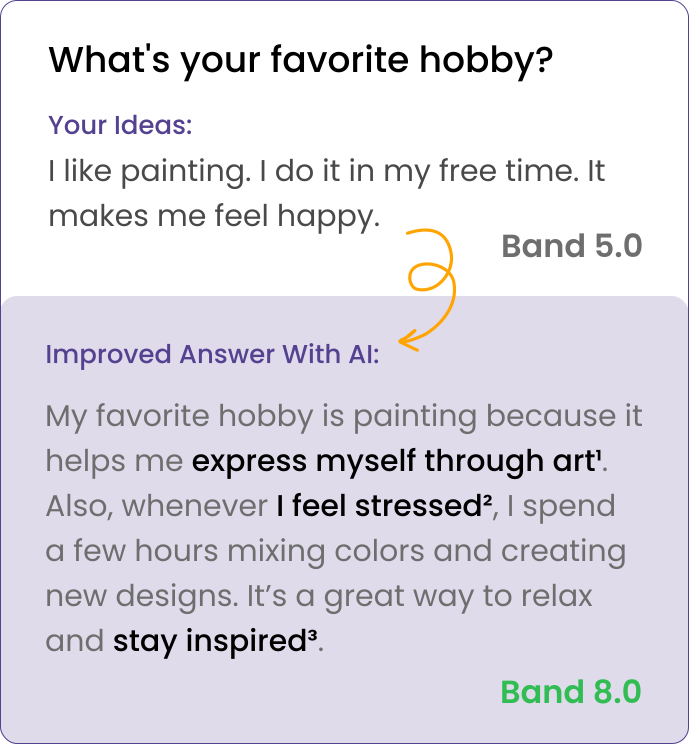
Practice IELTS Speaking answers in our free app
- Build personalized answers that match your target band.
- Turn short replies into fluent answers
- Let examiners fall in love with your answers!
Related Articles
Sample Answers
IELTS Speaking Part 1: Concentration Questions & Answers (Sep-Dec 2026)
Latest Sep-Dec 2026 IELTS Speaking Part 1 questions for Concentration. Read Band 9 sample answers, or use our AI app to turn your own ideas into perfect answers.
Sample Answers
IELTS Speaking Part 1: Jewelry Questions & Band 9 Answers (2026)
Latest Sep-Dec 2026 IELTS Speaking Part 1 questions for Jewelry. Read Band 9 sample answers or generate personal answers using our AI.
Sample Answers
IELTS Speaking Part 1: Colors Questions & Answers (Sep-Dec 2026)
Latest Sep-Dec 2026 IELTS Speaking Part 1 questions for Colors. Read Band 9 sample answers, or use our AI app to turn your own ideas into perfect answers.