IELTS Speaking Part 1: Advertising Questions & Band 9 Answers (2026)
Use our AI tools to get personalized Band 9 answers and vocabulary to talk about marketing and commercials.
Start Practicing →Advertising is a modern topic that examiners love. They might ask if you watch TV commercials, if you buy things you see online, or how you feel about pop-up ads. To score Band 9, avoid saying "I don't like ads." Instead, use words like intrusive, ad-blocker, targeted advertising, or commercial break to describe your experience.
How to Use These Sample Answers
Below are the latest 2026 questions for "Advertising."
Important: These answers are for a person who hates online ads. They use ad-blockers on their computer and pay for Premium subscriptions to avoid watching commercials. But if you love watching funny TV commercials, or if you often buy things you see on Instagram ads, these answers are probably not for you.
So, here is the plan:
Read these samples to understand the Band 9 structure.
Use the IELTS Speaking Lab App to get personalized answers. It gives you perfect vocabulary that fits your real life—whether you block every ad or enjoy shopping on social media.
Part 1: Questions & Model Answers about Advertising
1. How do you feel about advertisements?
To be honest, I find them incredibly intrusive. I hate being bombarded with promotions when I am trying to focus on something else. They often disrupt my concentration and feel like a waste of time.
2. Do you watch TV commercials?
No, never. I don't watch traditional TV anymore; I only use streaming services. I pay for the premium subscription specifically to avoid the commercial breaks. I have zero tolerance for interruptions.
3. Do you buy products you see in ads?
Very rarely. I am quite skeptical of marketing claims. If I see an ad, I assume it is exaggerated. I prefer to do my own research or ask friends for recommendations rather than trusting a flashy 30-second clip.
4. Do you use an ad-blocker?
Yes, absolutely. I have an ad-blocker installed on my browser and my phone. It makes the internet much cleaner and faster. Without it, I find websites are cluttered with distracting banners and pop-ups.
5. What kind of advertisements do you find most annoying?
I detest unskippable ads on video platforms. Being forced to watch a 15-second clip before I can watch the video I clicked on makes my blood boil. It is a terrible user experience.
6. Do you like funny or serious advertisements?
If I have to watch one, I prefer funny ones. Humor can make a brand seem more relatable. A clever or witty ad might actually make me chuckle, whereas a serious, hard-sell approach just turns me off completely.
7. Have you ever bought something because of an advertisement?
Once or twice. I remember seeing an ad for a noise-canceling headset that was perfect for my work.. The algorithm targeted me perfectly because I had been searching for office equipment recently.
8. Do you think there are too many ads nowadays?
Yes, we are living in an age of information overload. You can't walk down the street or open an app without seeing a logo or a slogan. It feels like our visual space is constantly being sold to the highest bidder.
9. What do you think about advertisements on social media?
They are getting smarter and creepier. The targeted advertising is so specific that it feels like the apps are listening to my conversations. Sometimes I see ads for hobbies I haven't even searched for online, which is unsettling.
10. Do you prefer online ads or billboards?
I prefer billboards. They are passive; they sit on the side of the road and don't interrupt what I am doing. Online ads, on the other hand, pop up in your face and demand your attention, which I find very aggressive.
11. Do you think advertising influences children?
Definitively. Children are very impressionable. They see colorful ads for sugary food or toys and immediately pester their parents to buy them. I think there should be stricter regulations on marketing to kids.
12. Is advertising important for businesses?
Yes, it is a necessary evil. Without brand awareness, a company cannot survive. Even though I dislike ads as a consumer, I understand that businesses need to reach their target audience to generate sales.
13. Do you listen to ads on the radio or music apps?
No, I pay for Spotify Premium to avoid them. Listening to music is my way of relaxing, and hearing a loud, enthusiastic voice trying to sell me car insurance ruins the mood instantly.
14. What makes an advertisement effective?
I think a good ad needs a catchy jingle or a memorable slogan. If it gets stuck in your head, it has done its job. Also, high production value and a clear message help to build credibility.
15. Do you like seeing celebrities in ads?
Not really. I think celebrity endorsements are a bit lazy. Just because a famous actor is holding a bottle of perfume doesn't mean the perfume is good. It feels like a shallow marketing tactic.
16. Do you get spam emails?
Yes, my junk folder is full of them. I constantly get promotional emails from newsletters I never signed up for. I usually unsubscribe immediately. It is just digital clutter.
17. Have you ever clicked on an online ad by mistake?
Yes, often. Designers use dark patterns to make the "close" button tiny or hard to find. It is very frustrating when you accidentally click a banner and get redirected to a shopping site.
18. Do you see ads for educational courses?
Yes, often. Since I search for study materials online, I get targeted by universities and online course providers. Those are slightly less annoying because they are actually relevant to my interests.
19. Do you think advertising will change in the future?
I think it will become even more personalized. With AI, companies will create hyper-personalized ads that are tailored exactly to your personality and mood. It will be harder to distinguish between content and marketing.
20. Do you pay attention to flyers or leaflets handed out on the street?
No, I usually refuse them politely. If I take one, it will just end up in the recycling bin at home. I think printing paper flyers is bad for the environment and an outdated way to advertise.
Key Vocabulary for IELTS Topic: Advertising
Here is the complete glossary of every bolded word and phrase used in the answers above.
Ad-blocker: Software that prevents advertisements from appearing on a web page.
Aggressive: Behaving in a forceful way; trying very hard to sell something.
Algorithm: A process used by social media sites to decide which ads to show you.
Billboards: Large outdoor boards for displaying advertisements.
Bombarded with: To be attacked continuously with something (like too many ads).
Brand awareness: How familiar people are with a particular brand or product.
Catchy jingle: A short song or tune used in advertising that is easy to remember.
Celebrity endorsements: When a famous person is paid to say they use a product.
Clutter: A collection of things lying about in an untidy mass (can be physical or digital).
Commercial breaks: Short interruptions during a TV show for advertisements.
Credibility: The quality of being trusted and believed in.
Dark patterns: Tricks used in websites/apps to make you do things you didn't mean to (like clicking an ad).
Detest: To dislike someone or something very much.
Disrupt my concentration: To stop you from focusing on what you are doing.
Distinguishing: Recognizing the difference between two things.
Distracting banners: Long rectangular ads on websites that take your attention away.
Enthusiastic voice: A way of speaking that sounds very excited and happy (common in radio ads).
Exaggerated: Made to seem better or larger than it really is.
Flashy: Looking expensive and colorful, but maybe not having real value.
Hard-sell: An aggressive way of selling where the salesperson puts pressure on you.
High production value: When a video or ad looks very expensive and professional (like a movie).
Highest bidder: The person or company willing to pay the most money.
Hyper-personalized: Extremely specific to one person's interests and data.
Immediately pester: To start annoying someone (asking them to buy something) right away.
Impressionable: Easily influenced or affected by what you see (often used for children).
Information overload: Being given too much information at once.
Intrusive: Causing disruption or annoyance through being unwelcome or uninvited.
Junk folder: The place in your email where spam goes.
Logo: A symbol or other design adopted by an organization to identify its products.
Make me chuckle: To make me laugh quietly.
Makes my blood boil: An idiom meaning "makes me very angry."
Memorable slogan: A short phrase used in advertising that is easy to remember (e.g., "Just Do It").
Necessary evil: Something that you dislike but accept because it is needed.
Outdated: Old-fashioned; no longer useful.
Passive: Not active or aggressive; just sitting there.
Pop up in your face: To appear suddenly right in front of you.
Pop-ups: Ads that suddenly appear in a new window on top of what you are viewing.
Premium subscription: A paid service (like YouTube Premium) that removes ads.
Promotional emails: Emails sent to inform you about sales or new products.
Quite skeptical: Not easily convinced; having doubts about something.
Reach their target audience: To successfully show an ad to the specific group of people likely to buy the product.
Redirected: Sent to a different website automatically.
Refuse them politely: To say "no" in a nice way.
Relatable: Something you can understand because you have experienced it yourself.
Relevant to my interests: Connected to things I actually like or care about.
Ruins the mood: Stops you from feeling happy or relaxed.
Shallow marketing tactic: A cheap or lazy trick used to sell things.
Stricter regulations: More severe rules and laws controlling something.
Tailored: Made or changed especially to be suitable for a particular person.
Targeted advertising: Ads shown to specific people based on their internet history/interests.
Unsettling: Making you feel anxious or uneasy (creepy).
Unskippable ads: Video ads that you are forced to watch until the end.
Unsubscribe: To choose to stop receiving emails from a company.
User experience: How easy and pleasant it is to use a website or app.
Visual space: The area around us that we can see.
Waste of time: Using time badly; not worth doing.
Witty: Showing quick and inventive verbal humor; clever.
Zero tolerance: Not accepting or allowing any of something.
Create Your Own Band 9 Answers
The answers above are perfect—if you are an Ad-Hater. But what if you love watching funny commercials? Or what if you buy things from Instagram?
Your answers need to be true so that you can easily recall them during a stressful exam.
IELTS Speaking Lab helps you turn your real ideas into Band 9 answers.
Select your topic - Advertising.
Input your rough idea (e.g., "I love watching the Super Bowl commercials").
Get personalized Band 9 answers instantly, with the perfect vocabulary for your story.
Not happy with these answers?
Change the core idea, band level difficulty, length and get a full glossary in our free app!
Start Practicing →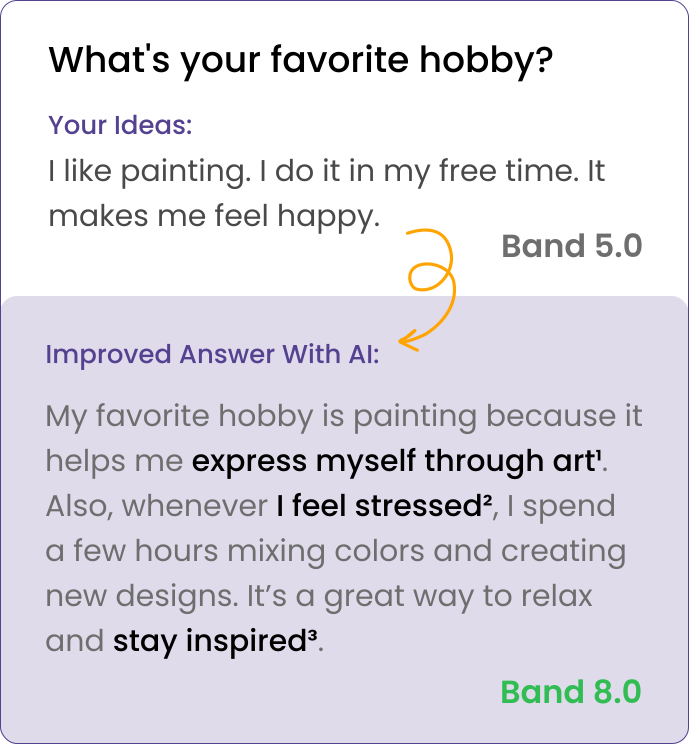
Practice IELTS Speaking answers in our free app
- Build personalized answers that match your target band.
- Turn short replies into fluent answers
- Let examiners fall in love with your answers!
Related Articles
Sample Answers
IELTS Speaking Part 1: Concentration Questions & Answers (Sep-Dec 2026)
Latest Sep-Dec 2026 IELTS Speaking Part 1 questions for Concentration. Read Band 9 sample answers, or use our AI app to turn your own ideas into perfect answers.
Sample Answers
IELTS Speaking Part 1: Jewelry Questions & Band 9 Answers (2026)
Latest Sep-Dec 2026 IELTS Speaking Part 1 questions for Jewelry. Read Band 9 sample answers or generate personal answers using our AI.
Sample Answers
IELTS Speaking Part 1: Colors Questions & Answers (Sep-Dec 2026)
Latest Sep-Dec 2026 IELTS Speaking Part 1 questions for Colors. Read Band 9 sample answers, or use our AI app to turn your own ideas into perfect answers.