IELTS Speaking Part 1: Topics, Questions, Answers (Sep-Dec 2026)
Latest Sep-Dec 2026 IELTS Speaking Part 1 topics and questions. Read Band 9 sample answers or generate personal answers using our AI.
Start Practicing →IELTS Speaking Part 1 is the "Introduction" section of the test. It lasts roughly 4 to 5 minutes.
The examiner will check your ID and then ask you simple questions about your life, your habits, and your opinions. The goal is to help you relax and speak naturally before the harder parts of the exam. However, "simple" questions are a trap — if you answer too briefly, you lose the chance to show your fluency.
Latest IELTS Speaking Part 1 Topics (September-December 2026)
To see the full list of questions, model answers, and word lists, click on the Topic Name (e.g., Work).
1) Core Topics (Always Tested)
Work (Do you work? Do you like your job? Is it difficult?)
Study (What is your major? Why did you choose it? Do you prefer studying alone?)
Home / Accommodation (Do you live in a house or apartment? Which room is your favorite?)
Hometown (Where are you from? Has it changed recently?)
2) New Topics (September – December 2026)
Birthdays (Do you usually celebrate your birthday? What kind of gifts do you like to receive?)
Cars (Do you like traveling by car? Do you have a driver's license?)
Clothes (What is your style? Do you wear branded clothes? Do you wear a uniform?)
Dreams (Do you often remember your dreams? Do you share your dreams with others?)
Evening Time (What do you usually do in the evening? What did you do yesterday evening?)
Films & Cinemas (Do you like watching films? How often do you go to the cinema?)
Headphones (Do you use headphones? What type of headphones do you use?)
History (Do you like learning about history? What historical event do you find most interesting?)
Jewelry (Do you often wear jewelry? What kind of jewelry do you like?)
Jokes & Comedies (Do you enjoy telling jokes? Are you good at remembering jokes?)
Life Stages (Do you enjoy your current stage of life? What is the most difficult stage of life?)
Mirrors (How often do you look in a mirror? Do you usually look in the mirror before you go out?)
Morning Time (How do you wake up in the morning? What did you do this morning?)
Music (What genre do you like? Can you play an instrument? Do you like live music?)
Old Buildings (Do you like looking at old buildings? What is the oldest building you have seen?)
Outer Space & Stars (Do you like looking at the stars? Would you like to travel into space?)
Parks & Gardens (Do you often visit parks? What do you usually do in a park?)
Scenery (Is the scenery good in your hometown? Do you take photos of scenery?)
Science (Do you like science? Did you study science at school?)
Shopping (Do you enjoy shopping? How often do you go shopping?)
Singing (Do you like singing? Have you ever learned how to sing? )
Sleep (Do you think sleep is important? Do you ever take naps during the day?)
Social Media (Which apps do you use? Is social media addictive? Do you post often?)
Sports Teams (Do you like sports teams? Do you support a specific team?)
Teachers (Do you have a favorite teacher? What makes a good teacher?)
Tidiness (Are you a tidy person? Do you think people should be tidy all the time?)
Watches (Do you wear a watch? Have you ever received a watch as a gift?)
Websites (What kinds of websites do you often visit? What is your favorite website?)
3) Retained (Still in use in 2026)
Advertising (Do you buy things because of ads? Are there too many ads on TV?)
Art (Do you like visiting galleries? Did you learn art at school?)
Borrowing & Lending (Have you ever borrowed books from others? Do you like lending things to others?)
Buildings (Do you like looking at buildings? Are there any historic buildings in your city?)
Chatting (Do you like chatting with friends? Do you prefer to chat online or face-to-face?)
Childhood Activities (What were your favorite activities? What did you usually do after school?)
Concentration (Is it difficult for you to concentrate? When do you need to concentrate the most?)
Crowded Places (Is the city where you live crowded? Is there a crowded place near your home?)
Daily Routine (What is your morning routine? Do you like to plan your day?)
Days Off (Do you have many days off? What do you usually do on your days off?)
Gifts (Do you prefer giving or receiving gifts? When was the last time you gave a gift?)
Hobbies (What do you do in your free time? Did you have a hobby as a child?)
Holidays (What do you do during holidays? Do you prefer relaxing or active holidays?)
Internet (How often do you use the internet? What do you mainly use it for?)
Keys (Do you always bring keys with you? Have you ever lost your keys?)
Old People (Do you like spending time with old people? Have you ever worked with old people?)
Plants (Do you like plants? Do you have any plants in your home?)
Public Places (Do you like going to public places? What's your favorite public place?)
Reading (Do you read often? Do you prefer paper books or ebooks?)
Rules (What are some of the rules in your hometown? Are there any rules you disagree with?)
Sharing (Did your parents teach you to share? What kind of things do you like to share?)
Shoes (Have you ever bought shoes online? Do you have a favorite pair of shoes?)
Technology (What gadgets do you use? Is technology good for children's development?)
Typing (Do you type fast? How did you learn to type? When do you need to type?)
Walking (Do you walk a lot? Why do people like to walk in parks?)
4) Common Everyday Topics (may be used to test your everyday vocabulary)
Animals (Do you like animals? Have you ever had a pet?)
Colors (What is your favorite color?, Are there any colors you dislike?)
Environment (Is there much pollution where you live? Are there any environmental problems in your country?)
Family (Do you have a large family? Who are you closest to?)
Food (What is your favorite dish? Can you cook? Do you prefer eating out?)
Friends (What do you do with friends? Is friendship important?)
Health (How do you stay healthy? Is fast food popular in your country?)
Travel (Do you like traveling? Where do you want to go next? Do you prefer trains or planes?)
Transport (How do you travel to work/school? Is traffic a problem in your city?)
Weather (What is your favorite season? Does rainy weather affect your mood?)
How to Answer Part 1 Questions: Two Simple Strategies
To score a Band 7 or higher, never just say "Yes" or "No." You must extend your answers.
We recommend two simple strategies depending on the question type.
1. The SEER Method
Best for: Opinions, Habits, and General Questions.
S - Short Answer: Directly answer the question.
E - Extend: Give a reason or detail.
E - Example: Give a specific example.
R - Reflect: Mention how you feel about it.
2. The A123 Method
Best for: "Do you prefer X or Y?" or "How often...?" questions.
A - Answer: Start by saying "It depends..."
1 - Option 1: Explain one situation (e.g., "When I am working...")
2 - Option 2: Explain the other situation (e.g., "But when I am relaxing...")
3 - Conclude: Give a final thought.
Want to master these techniques? Read our full guide on IELTS Speaking Part 1 Strategies: How to Extend Answers
Create Your Own Band 9 Answers
Reading sample answers is helpful, but you shouldn't memorize them. Examiners are trained to spot memorized scripts.
Your answers need to be true so that you can easily recall them during a stressful exam.
IELTS Speaking Lab helps you turn your real ideas into Band 9 answers.
Select your topic - Study.
Input your rough idea (e.g., "I study Data Analysis but it's really hard!").
Get personalized Band 9 answers instantly, with the perfect vocabulary for your story.
Not happy with these answers?
Change the core idea, band level difficulty, length and get a full glossary in our free app!
Start Practicing →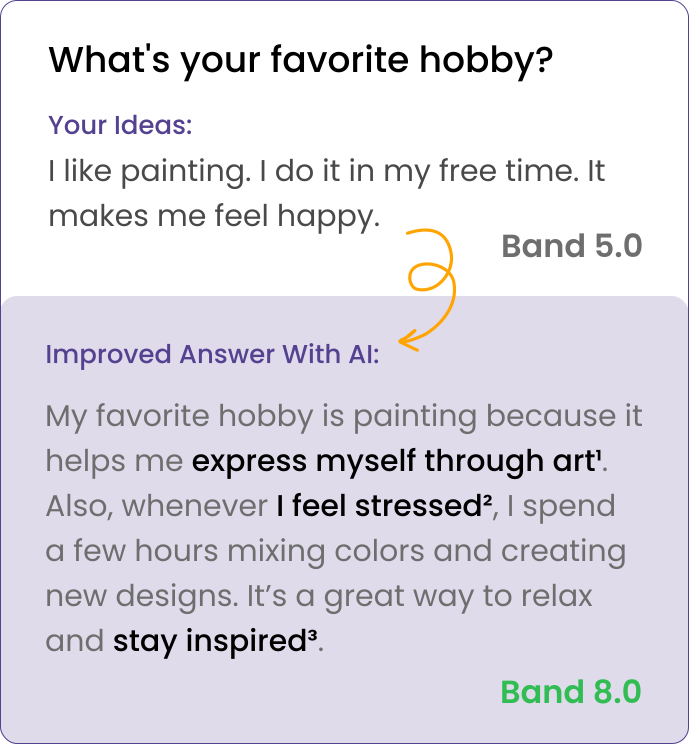
Practice IELTS Speaking answers in our free app
- Build personalized answers that match your target band.
- Turn short replies into fluent answers
- Let examiners fall in love with your answers!
Related Articles
Sample Answers
IELTS Speaking Part 1: Concentration Questions & Answers (Sep-Dec 2026)
Latest Sep-Dec 2026 IELTS Speaking Part 1 questions for Concentration. Read Band 9 sample answers, or use our AI app to turn your own ideas into perfect answers.
Sample Answers
IELTS Speaking Part 1: Jewelry Questions & Band 9 Answers (2026)
Latest Sep-Dec 2026 IELTS Speaking Part 1 questions for Jewelry. Read Band 9 sample answers or generate personal answers using our AI.
Sample Answers
IELTS Speaking Part 1: Colors Questions & Answers (Sep-Dec 2026)
Latest Sep-Dec 2026 IELTS Speaking Part 1 questions for Colors. Read Band 9 sample answers, or use our AI app to turn your own ideas into perfect answers.